Estimated reading time: 10 minutes
As organizations scale, planning complexity increases faster than the tools most teams rely on. For many, the decision to adopt a dedicated resource planning tool capable of supporting enterprise operations is driven by a fundamental need for clarity. This typically happens when everyday planning becomes unreliable, decisions take longer than necessary, and teams spend more time coordinating work than executing it.
Operational friction is rarely the result of a single event; it is a gradual build-up that occurs as an organization expands its headcount, project portfolio, and geographic footprint. When the systems that supported a team of sixty are forced to support a team of six hundred, the cracks begin to show.
These signs often show up as persistent overcommitment across teams, declining quality of work, and rising employee burnout. Many organizations fail to recognize these patterns until they result in serious delivery or capacity issues.
That said, you can identify patterns and problems before they cause bottlenecks for your organization.
The following are the clearest signs that your organization has reached a tipping point and requires a more sophisticated approach to resource and project management.
1. Planning relies on institutional memory over shared data
When accurate planning depends on knowing “who to ask” rather than “where to look,” your organization is operating at a significant risk. In many firms, critical information, such as a specialist’s true availability, the maintenance status of shared equipment, or the specific certifications of a field team, lives only in the minds of a few long-tenured employees.
This reliance on institutional memory creates a fragile ecosystem. When a key planner is out of the office or leaves the company, the quality of project delivery suffers immediately. A resource planning tool transitions your organization from a culture of “asking” to a culture of “knowing.” By documenting resource attributes and constraints in a single, accessible source of truth, planning stops depending on individuals and starts depending on verifiable data.
Case study: How Wincor Nixdorf solved the overbooking problem with Ganttic
Wincor Nixdorf is a leading global provider of IT solutions and services for retail banks and retailers. The company’s main challenge was to avoid overbooking shared resources within a large, global team.
After using Ganttic, they were able to view the resources and projects from two different perspectives, enabling them to see how their plans worked together.
Read our case study to find out more about how Ganttic supported Wincor Nixdorf: Case Study: Wincor Nixdorf – Capacity Planning & Project Portfolio Management Across the Globe

2. Projects fail due to capacity misalignment
It is a common misconception in the corporate world that missed deadlines are the result of poor execution or shifting requirements. In reality, the root cause is frequently a lack of macro-level visibility. Projects are often approved in a vacuum, without a realistic understanding of how they compete for the same pool of human and capital assets.
Without a tool to map these dependencies across the entire enterprise, timelines that look feasible in isolation will inevitably collapse when multiple initiatives run in parallel.
Discover your organization’s true capacity with Ganttic: What’s missing? What are the opportunities?
Ganttic connects the project pipeline to actual resource capacity. This allows leadership to visualize the “ripple effect” of any change in real-time, providing the foresight to adjust scope or resequence tasks before a bottleneck becomes a crisis.
This approach provides a comprehensive view of your entire resource pool, enabling better capacity planning for both immediate projects and future initiatives. Gantt charts are particularly effective for visualizing these resource allocations across multiple projects simultaneously.
3. The hero resources are about to burn out
Every organization has a handful of ‘hero’ resources. These might be niche experts, high demand equipment, or facilities that almost every project depends on. When these resources start feeling stretched, the issue is often framed as poor prioritization or a lack of discipline.
In reality, the problem usually shows up much earlier.
Most teams plan in silos. Sales commits timelines, project teams build schedules, operations allocates capacity, and HR tracks availability, all in separate tools. As a result, the true load on a shared resource only becomes visible when deadlines are already at risk and people are already exhausted. By then, the damage is done.
With Ganttic, teams gain full visibility through resource views and filters
At Ganttic, our goal is to give teams a clear, shared view of how resources are actually being used across the organization through clear and easy-to-use online Gantt charts.
Over time, this visibility helps prevent burnout, reduces dependency on a few critical individuals, and protects your most valuable assets before it impacts performance and team well-being.
In other words, you do not find out you are about to lose your best talent when they hand in their resignation. You see the warning signs while there is still time to act.
This applies to equipment as well.
Using resource views and filters, you can also spot which machines or locations are consistently overloaded and which ones still have capacity. This makes it easier to rebalance work early, adjust timelines, or plan hiring and investments based on real demand, not gut feeling.
See how to highlight resource conflicts in Ganttic:
4. Strategic growth is stifled by tactical tunnel vision
As discussed in our article How Resource Management Is Changing in 2026, planning today often struggles to keep up with the speed of business. Shorter decision cycles make it tempting to focus only on what is immediately in front of you. However, especially if you are an enterprise with multiple teams and dependencies, strategic maturity still requires a long term view, not to lock plans in place, but to understand what is possible.
When planning stays limited to the next few days or weeks, organizations operate reactively, delaying hiring and avoiding new commitments due to unclear long-term capacity.
Strategic planning is less about fixed roadmaps and more about being able to look ahead and test different scenarios. What happens if you take on a new contract? What if a project is delayed or a critical resource is reassigned?
Case Study: Ab Ovo – Planning resources for software solutions
Ab Ovo provides innovative business and software solutions. They are a leading company in the logistics sector and a market leader in the European rail industry.
By using Ganttic, the team gained visibility into future capacity. This allowed them to assess upcoming demand, test scenarios, and make hiring and delivery decisions earlier, without locking plans too far in advance. They used Ganttic to predict the amount of work in their pipeline as part of their project pipeline management.
Find out more about how Ab Ovo got the most out of Ganttic: Case Study: Ab Ovo – Planning resources for software solutions
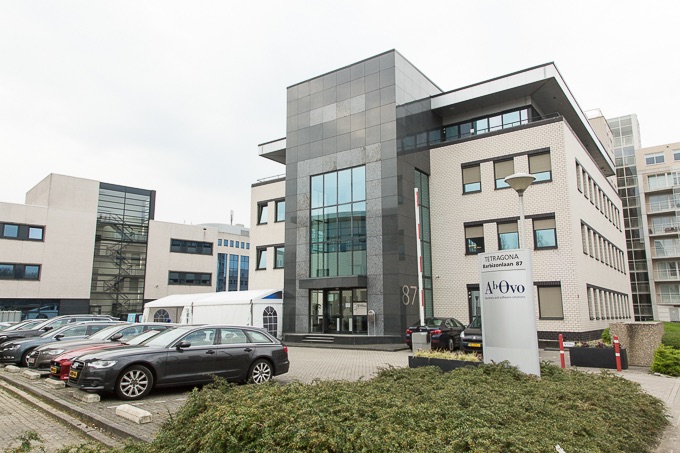
Ab Ovo, The Netherlands
5. Coordination requires never-ending meeting cycles
When alignment requires constant meetings just to confirm who is doing what and when, the problem isn’t a lack of communication. Rather, it’s the lack of a shared plan. Without a single source of truth, coordination defaults to verbal updates. Information is repeated, interpreted, and occasionally distorted as it moves through the hierarchy.
A resource planning tool for an enterprise reduces this dependency on manual synchronization. When plans are visible and updates are reflected in real time, teams can verify the current state of play without needing a status meeting. This does not eliminate the need for human connection; rather, it makes meetings more purposeful, shifting the focus from “what is happening” to “how do we solve this problem?”
See what everyone’s and every piece of equipment is working on via real-time view in Ganttic
In Ganttic, teams work from a shared, real-time planning view that acts as a single source of truth. Updates are reflected instantly, so stakeholders and project managers can check the current state of work without waiting for a meeting or chasing updates across teams.
This makes coordination less about constant alignment and more about informed action. Meetings still happen, but they focus on decisions and problem solving, not on reconstructing what is already supposed to be known.
See how you can invite admins in Ganttic here:
6. Spreadsheets have become a structural risk
Spreadsheets are the duct tape of the business world. They are flexible and familiar, but eventually incapable of holding a complex structure together. As your organization grows, the manual effort required to keep a master schedule updated becomes a full-time job in itself.
Moreover, spreadsheets introduce silent errors. A broken cell reference or a forgotten manual update can lead to costly double-bookings or missed dependencies that aren’t discovered until it’s too late.
In short, spreadsheets do not cover your organizational needs anymore.
Replace uncertainty with clarity
As an efficient Excel replacement, Ganttic replaces brittle manual logic with dynamic timelines, automated conflict detection, and a multi-user environment where updates happen once and reflect everywhere.
Ganttic offers a solution to this problem by providing a visual timeline where project tasks, dependencies, and resource allocations are clearly displayed. The goal is to transform abstract spreadsheet data into intuitive visual plans that make it easier to spot conflicts and opportunities for optimization and effective planning.
7. Leadership lacks confidence in the numbers
Perhaps the most telling sign of an overextended system is when leadership no longer trusts the reports they receive. When utilization figures, delivery forecasts, and capacity estimates feel estimated rather than calculated, the result is clear:
- Decision making slows down.
- Risk avoidance becomes the default behavior.
- The organization loses its competitive edge.
A focused resource planning tool restores this confidence by centralizing inputs and reducing the manual handling of data. When the data is gathered directly from the source of the work, the resulting reports become actionable intelligence.
Not every organization needs a traditional, multi-million dollar ERP system that attempts to manage everything from payroll to the supply chain.
In fact, many organizations find these systems too rigid and overly complex for the fast-paced world of project scheduling.
With Ganttic, leadership works from the same real-time data that teams use for planning. Capacity, utilization, and delivery timelines are based on actual schedules, not manually consolidated reports. This makes it easier to trust the numbers and move forward with decisions, instead of questioning the data behind them.
Ganttic: Built for enterprise-level planning, without the usual enterprise-level friction
Enterprise teams deal with scale, dependencies, and constant change. The problem is not a lack of tools, but the absence of a planning layer that connects strategy to day-to-day execution without slowing teams down. Ganttic focuses on that missing layer.
Rather than forcing organizations into rigid and heavy ERP workflows or leaving them to compile spreadsheets and task tools, Ganttic provides a dedicated, shared, visual planning environment that reflects how work actually happens.
Enterprise teams gain the following with Ganttic:
- A single source of truth for planning: Teams, managers, and leadership all work from the same live plan, reducing misalignment across departments and locations.
- Capacity insight grounded in real schedules: Utilization, availability, and delivery timelines are based on actual plans, not manually maintained reports or assumptions.
- Planning that scales beyond people: Ganttic supports equipment, vehicles, tools, and locations alongside human resources, making it suitable for complex enterprise operations.
- Lower coordination overhead as complexity grows: Shared views and role- and skill-based access reduce the need for constant status meetings while keeping everyone aligned.
- Better decision-making: Future commitments, hiring plans, and new projects can be evaluated against real capacity before decisions are finalized.
If your organization has outgrown spreadsheets and workarounds, it may be time to see what focused enterprise planning can offer.
Book a demo to see how Ganttic supports enterprise-level resource planning in practice.
Start a free trial to explore how your resources, projects, and capacity come together in one system.
Written by
Gökçe Karabay
Marketing Lead at Ganttic